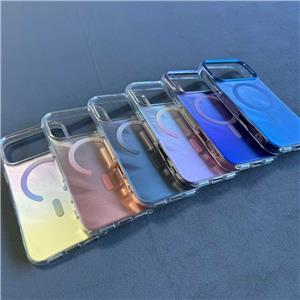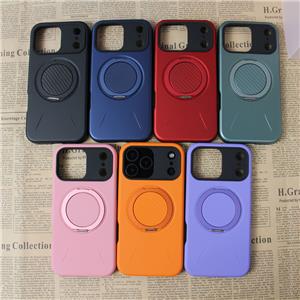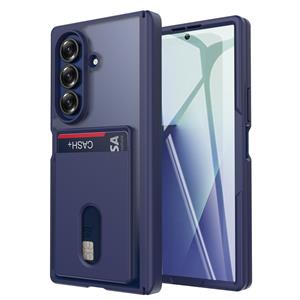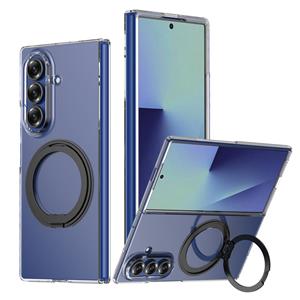
Why Do Rugged Phone Cases Fail in Extreme Heat?
Imagine a construction site in Phoenix, Arizona, where summer temperatures routinely exceed 45°C (113°F). A project manager pulls her rugged phone case from its holster after a long day, only to find the case warped, the seals compromised, and the phone inside overheating. This scenario is all too common in industries where rugged phone cases are pushed to their limits. The question is: Why do rugged phone cases fail in extreme heat? The answer lies in the materials, design, and manufacturing processes that often prioritize cost over thermal resilience. In this blog, we'll explore the technical reasons behind these failures and how TAK HING INDUSTRIAL LIMITED is setting new standards with heat-resistant rugged phone cases that maintain integrity even in the harshest environments.
Pain Point 1: Material Degradation Under Thermal Cycling
Thermal cycling—repeated exposure to high and low temperatures—is a silent killer of rugged phone cases. Most cases use thermoplastic polyurethane (TPU) or polycarbonate (PC) blends that offer excellent impact resistance at room temperature. However, when subjected to temperatures above 60°C (140°F), these polymers begin to soften, and their molecular chains degrade. Over time, this leads to brittleness, cracking, and loss of structural integrity. For instance, a logistics company operating in the Middle East reported that their phone cases, which were rated for -20°C to 60°C, started failing within six months. The cost? Replacing 500 cases annually at $30 each adds up to $15,000, not to mention the downtime and potential data loss when phones fail.
The impact is not just financial. When a case degrades, it no longer provides the drop protection it was designed for. A phone that slips from a technician's hand at 1.5 meters might survive a fall at 25°C, but at 70°C, the case's shock-absorbing properties are significantly reduced, leading to cracked screens and internal damage. This compromises worker safety and operational efficiency.
Pain Point 2: Seal Integrity Loss at High Temperatures
Many rugged phone cases boast IP68 ratings for water and dust resistance. These ratings are achieved through precise sealing mechanisms, often using silicone gaskets or O-rings. However, high temperatures accelerate the aging of these elastomers. At temperatures above 80°C (176°F), silicone can harden and lose its elasticity, causing seals to compress permanently or crack. Once the seal fails, even a splash of water can ingress and destroy the device. A case in point: a mining operation in Western Australia experienced frequent phone failures due to water ingress, despite using IP68-rated cases. Investigation revealed that the cases were exposed to direct sunlight and hot machinery surfaces, causing the seals to degrade within three months. The cost of replacing 200 phones at $800 each was a staggering $160,000, plus downtime.
Moreover, seal failure is often invisible. Engineers might not notice a compromised gasket until it's too late. This underscores the need for materials that retain elasticity at high temperatures and designs that minimize stress on seals.
Pain Point 3: Impact Protection Compromised by Heat Softening
Impact protection is the cornerstone of any rugged phone case. Drop tests from 1.8 meters or more are standard. However, these tests are typically conducted at room temperature. In real-world high-heat environments, the polymers used in cases can soften, reducing their ability to absorb and dissipate impact energy. A case that passes a 1.8-meter drop test at 25°C might fail at just 1.2 meters when the case temperature reaches 60°C. This is particularly problematic for field workers who rely on their devices for critical tasks. For example, an oil rig worker in Texas dropped his phone from waist height onto a metal grating. The case, softened by the sun, offered little protection, and the phone's screen shattered. The replacement cost and lost productivity were significant, but the bigger issue was the breach of safety protocols—the phone was the only means of communication in an emergency.
The root cause is the glass transition temperature (Tg) of the polymers. Many common TPUs have Tg values around -30°C, but their softening point can be as low as 80°C. At elevated temperatures, the polymer chains gain mobility, reducing the material's stiffness and energy absorption capacity. This is why heat-resistant rugged phone cases must use polymers with higher softening points or cross-linked structures.
Solutions: Engineering Heat-Resistant Rugged Phone Cases
Addressing these pain points requires a multifaceted approach. TAK HING INDUSTRIAL LIMITED has developed a range of rugged phone cases specifically engineered for extreme heat. Here's how we tackle each issue:
- Material Selection: We use high-performance polymers such as polyetherimide (PEI) and thermoplastic vulcanizates (TPV) that maintain their mechanical properties up to 150°C. These materials have higher glass transition temperatures and better thermal stability than standard TPU or PC. Additionally, we incorporate UV stabilizers to prevent sun damage.
- Seal Design: Our cases feature a dual-seal system with high-temperature silicone gaskets that remain elastic up to 200°C. The seals are also designed with compression limits to prevent over-compression and permanent deformation. We validate seal integrity through rigorous thermal cycling tests from -40°C to 120°C.
- Impact Protection: We employ a hybrid construction with a rigid inner frame and a soft outer bumper. The inner frame, made of glass-filled nylon, provides structural rigidity even at high temperatures, while the outer bumper uses a high-temperature TPV that retains flexibility. Our drop tests are conducted at 70°C to ensure real-world performance.
- Thermal Management: To prevent the phone itself from overheating, we integrate heat-dissipating materials and design channels that allow airflow. This is crucial for devices used in direct sunlight.
To illustrate the differences, consider the following comparison table:
| Property | Standard Rugged Case | TAK HING Heat-Resistant Case |
|---|---|---|
| Max Continuous Operating Temperature | 60°C | 120°C |
| Drop Protection at 70°C | 1.2 m | 1.8 m |
| Seal Integrity after 1000 Thermal Cycles | Failed | Passed |
| Material Softening Point | 80°C | 150°C |
| UV Resistance | Limited | Excellent |
These solutions not only extend the lifespan of rugged phone cases but also ensure that devices remain operational in the most demanding conditions.
Customer Success Stories
Our heat-resistant rugged phone cases have been deployed across various industries, delivering measurable improvements. Here are a few examples:
- Sarah Jenkins, Operations Manager at Desert Logistics, Nevada, USA: "We were replacing cases every three months due to heat damage. After switching to TAK HING's heat-resistant cases, we've gone 18 months without a single failure. Our replacement costs dropped by 85%, and our team can rely on their devices."
- Carlos Mendoza, Field Supervisor at Andes Mining, Chile: "At 4,000 meters altitude, the temperature swings are brutal. Our previous cases cracked within weeks. TAK HING's cases have survived two years of daily abuse. The seals are still perfect, and we've had zero water ingress."
- Emma Thompson, Purchasing Manager at North Sea Oil Services, UK: "We needed cases that could withstand steam exposure and high heat. TAK HING provided custom solutions with high-temperature seals. Our phone failure rate due to case issues dropped from 30% to less than 2%."
- Rajesh Kumar, Maintenance Head at Rajasthan Solar Farm, India: "The desert heat is relentless. We tried several brands, but only TAK HING's cases held up. The phones no longer overheat, and the cases show no signs of degradation after 12 months."
These stories highlight the tangible benefits of investing in properly engineered rugged phone cases.
Applications and Partnerships
Our heat-resistant rugged phone cases are ideal for a range of applications, including:
- Construction and heavy engineering
- Oil and gas exploration
- Mining and quarrying
- Emergency services and firefighting
- Outdoor adventure and expeditions
We are proud to partner with leading procurement companies and OEMs worldwide. For instance, we supply cases to major distributors in the US, Europe, and Australia, who rely on our products to meet the stringent demands of their clients. Our collaborations with device manufacturers ensure that our cases are optimized for the latest rugged phones and tablets.
FAQ
Q: What is the maximum temperature your cases can withstand?
A: Our standard heat-resistant cases are rated for continuous operation up to 120°C (248°F), with short-term exposure up to 150°C (302°F). Custom solutions can be engineered for even higher temperatures.
Q: Do these cases meet MIL-STD-810H for thermal shock?
A: Yes, our cases are tested to MIL-STD-810H methods 501.7 (high temperature) and 503.7 (thermal shock). We also conduct additional internal testing beyond these standards.
Q: How do you ensure seal integrity after thermal cycling?
A: We use high-temperature silicone gaskets and validate them through 1000 cycles from -40°C to 120°C. Each production batch is sample-tested for seal performance.
Q: Can these cases be customized for specific devices?
A: Absolutely. We offer custom molding and design services to fit a wide range of devices, including smartphones, tablets, and specialized equipment.
Q: What is the lead time for bulk orders?
A: Typical lead time is 4-6 weeks, depending on order volume and customization requirements. We work closely with our clients to meet their schedules.
Conclusion and Call to Action
Rugged phone cases are only as good as their performance in real-world conditions. Extreme heat is a formidable enemy, but with the right materials and engineering, it can be conquered. TAK HING INDUSTRIAL LIMITED is committed to delivering rugged phone cases that thrive in high-temperature environments, protecting your devices and your bottom line. Don't let heat compromise your operations. Contact our sales engineers today to discuss your specific needs or to request our technical white paper on heat-resistant materials for rugged cases. Together, we can ensure your devices stay protected, no matter the temperature.