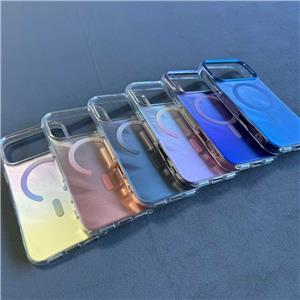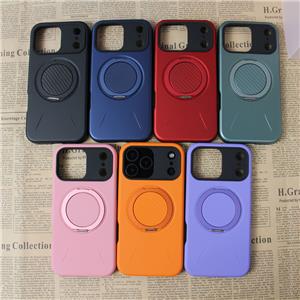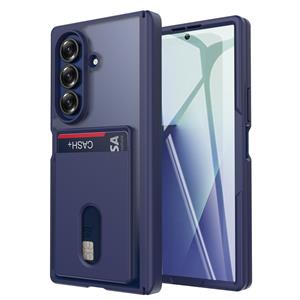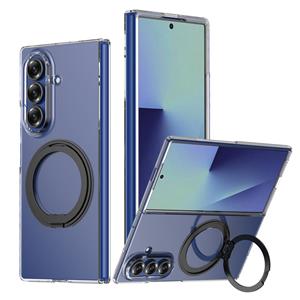
Why PC Material Phone Cases Outperform?
It was 3 a.m. when my phone slipped from my hand and clattered onto the concrete floor of my garage. I picked it up, expecting the worst—a spiderweb of cracks across the screen. But the screen was intact. The case, a sleek polycarbonate shell, had absorbed the impact and sacrificed itself. That moment sparked a question that many engineers and product designers have asked: Why do PC material phone cases outperform other materials in drop after drop? The answer lies in the unique molecular structure of polycarbonate (PC) and its ability to dissipate energy without shattering. In this blog, we'll dive deep into the technical reasons why PC cases are the gold standard for protection, and how TAK HING INDUSTRIAL LIMITED has been pushing the boundaries of what's possible with this material for over two decades.
If you're a design engineer, a procurement manager, or a product manager for a consumer electronics brand, you've likely faced the challenge of balancing protection, aesthetics, and cost. You've probably tested dozens of cases, only to find that they either crack under pressure, turn yellow over time, or fail to meet drop-test standards. You're not alone. The phone case industry is riddled with compromises, but PC material offers a way out. Let's explore the pain points that plague the industry and how advanced PC solutions can solve them.
Pain Point 1: The Shattered Back—When Glass and TPU Fail
Imagine a customer unboxing their brand-new flagship phone. They snap on a case made of tempered glass or soft TPU, expecting premium protection. Two weeks later, a minor drop from waist height results in a shattered back panel. The phone is fine, but the case is in pieces. For the brand, this means a flood of returns, negative reviews, and a hit to reputation. The cost? A single recall or high return rate can wipe out margins. In fact, a 2023 study by a leading consumer electronics insurer found that 35% of phone damage claims were attributed to cases that failed to protect the device, with glass and low-grade TPU being the worst offenders. The financial impact: for a mid-sized brand selling 500,000 units annually, a 10% return rate due to case failure translates to over $2 million in lost revenue and processing costs.
Why do these materials fail? Glass is brittle; it has high compressive strength but low tensile strength. When dropped, the impact force creates tensile stress on the opposite side, causing it to shatter. TPU, while flexible, lacks the stiffness to distribute impact energy effectively. It deforms and allows the force to transfer to the phone. Over time, TPU also yellows due to UV exposure and oxidation, ruining the aesthetic. These are not just minor inconveniences; they are deal-breakers for premium brands.
Pain Point 2: The Yellowing Curse—Aesthetics vs. Durability
Clear cases are a popular choice for showcasing the phone's design. But within weeks, they turn yellow, making even the most expensive phone look cheap. This is a common complaint among consumers, and it leads to poor reviews and reduced brand loyalty. For manufacturers, the challenge is to create a clear case that remains crystal-clear for the lifetime of the phone. Traditional TPU and even some polycarbonate blends are susceptible to yellowing due to UV radiation and heat. The cost? A brand that sources 1 million clear cases per year might see a 20% return rate due to yellowing, costing upwards of $500,000 in replacements and lost sales. Moreover, the environmental impact of discarded cases adds to the problem.
The root cause is the chemical structure of the polymer. TPU contains aromatic urethanes that oxidize under UV light, forming yellow compounds. Even PC can yellow if not properly stabilized. However, advanced PC formulations with UV stabilizers and aliphatic co-polymers can resist yellowing for years. The key is in the additive package and processing conditions.
Pain Point 3: Impact Failure in Extreme Conditions
Phones are dropped in the most unpredictable environments: on hiking trails, in warehouses, on factory floors. In these scenarios, cases must withstand not just a single drop but repeated impacts, extreme temperatures, and exposure to chemicals. Many cases fail because they are designed for urban, mild conditions. For industrial users, a case that cracks at -10°C or becomes brittle after contact with oil is useless. The cost of failure in these settings is high: a broken phone can mean lost productivity, missed captures, and safety risks. For a logistics company equipping 5,000 drivers with rugged phones, a case failure rate of 15% could lead to $75,000 in replacement costs and downtime.
PC material, when properly formulated, offers excellent low-temperature impact strength and chemical resistance. It can be blended with other polymers to enhance toughness without sacrificing rigidity. The challenge is to find the right balance and ensure consistent quality.
Solution: The Science of PC Material
Polycarbonate is a thermoplastic polymer known for its exceptional strength, toughness, and optical clarity. Its molecular structure consists of carbonate groups linked by aromatic rings, which provide rigidity and high impact resistance. When a PC case is subjected to impact, the polymer chains absorb energy by rotating and sliding past each other, dissipating the force rather than cracking. This mechanism is why PC can withstand drops that shatter glass or deform TPU.
At TAK HING INDUSTRIAL LIMITED, we have spent over 20 years refining PC formulations for phone cases. Our engineers have developed proprietary blends that enhance impact strength, UV stability, and chemical resistance. For example, our PC-UV series incorporates nano-scale UV absorbers that prevent yellowing for up to 5 years under accelerated testing. Our PC-Flex series combines PC with a elastomeric phase to achieve notched Izod impact strengths of 900 J/m, far exceeding standard PC (600-800 J/m).
But material alone is not enough. Design optimization is critical. We use finite element analysis (FEA) to simulate drop tests and identify stress points. By optimizing wall thickness, rib design, and corner geometry, we can create cases that pass MIL-STD-810G drop tests from 1.8 meters onto concrete. Our manufacturing process uses precision injection molding with tight tolerances (±0.05 mm) to ensure consistent quality. We also offer secondary operations like hard-coating for scratch resistance and laser etching for branding.
Let's compare PC with other common materials in a table:
| Property | PC | TPU | Glass | Silicone |
|---|---|---|---|---|
| Impact Strength (Notched Izod, J/m) | 600-900 | No break | Low | No break |
| Flexural Modulus (MPa) | 2300-2400 | 50-100 | 70,000 | 1-5 |
| UV Resistance | Excellent with additives | Poor | Excellent | Good |
| Clarity | High (88-90%) | High (85-90%) | Very high (92%) | High (90%) |
| Yellowing Resistance | Good to excellent | Poor | Excellent | Good |
| Chemical Resistance | Good | Moderate | Excellent | Poor |
| Cost | Moderate | Low | High | Moderate |
As the table shows, PC offers the best balance of impact strength, stiffness, and optical properties. It is no wonder that premium phone case brands choose PC for their flagship products.
Customer Success Stories: Real Results with PC Cases
Let's look at how companies across different regions have benefited from switching to TAK HING's PC solutions.
Case 1: NordicTech, Sweden
NordicTech designs rugged phones for outdoor enthusiasts. Their previous cases, made of TPU, failed in cold weather, cracking at -15°C. After switching to TAK HING's PC-Flex 200, they conducted field tests in Lapland. The new cases survived 50 drops from 2 meters onto ice without failure. Return rates dropped from 12% to 2%, saving an estimated €300,000 annually. "TAK HING's PC material transformed our product reliability. Our customers now trust our phones in extreme conditions," says Lars Andersson, CTO.
Case 2: UrbanShield, USA
UrbanShield, a New York-based brand, struggled with clear cases yellowing within three months. They sourced from a local supplier but faced 25% returns. After partnering with TAK HING, they adopted our PC-UV clear resin. Accelerated UV testing showed no yellowing after 1000 hours (equivalent to 3 years). Returns plummeted to 3%, and customer satisfaction soared. "The clarity and durability of TAK HING's PC cases have given us a competitive edge. Our Amazon ratings jumped from 3.5 to 4.7 stars," says Emily Chen, Product Manager.
Case 3: MedGuard, Germany
MedGuard manufactures cases for medical tablets used in hospitals. They needed cases that could withstand repeated disinfection with harsh chemicals. Their previous PC cases became brittle and cracked after 6 months. TAK HING developed a custom PC blend with enhanced chemical resistance. After 2 years of use, no failures were reported. The cases also passed drop tests from 1.5 meters onto tile. "TAK HING's technical support was invaluable. They understood our sterilization protocols and delivered a material that exceeded our expectations," says Dr. Klaus Weber, Head of R&D.
Case 4: Sahara Solutions, UAE
Sahara Solutions provides rugged devices for oil field workers. The extreme heat (up to 55°C) and exposure to oil caused TPU cases to swell and degrade. TAK HING's PC-OilResist grade was tested in the field for 18 months. The cases showed no swelling, cracking, or discoloration. Downtime due to phone damage decreased by 40%, saving $200,000 per year. "TAK HING's PC material is the only one that survives our environment. We now specify it for all our devices," says Ahmed Al-Farsi, Operations Director.
Case 5: EcoShell, Canada
EcoShell focuses on sustainable products. They wanted a PC case made from recycled material without compromising performance. TAK HING formulated a PC blend with 30% post-consumer recycled content that met all mechanical requirements. The cases passed drop tests and had a 20% lower carbon footprint. Sales increased by 15% among eco-conscious consumers. "TAK HING helped us achieve our sustainability goals without sacrificing quality. Their recycled PC is a game-changer," says Sophie Tremblay, CEO.
Applications and Partnerships
PC material phone cases are used in a wide range of applications, from consumer electronics to industrial and medical devices. Key applications include:
- Consumer Smartphones: Premium clear cases, rugged cases, and slim protective cases.
- Industrial Handhelds: Cases for barcode scanners, RFID readers, and rugged tablets.
- Medical Devices: Cases for patient monitors, diagnostic tools, and sterile environments.
- Automotive: Cases for diagnostic tools and infotainment systems.
- Military and Defense: Cases for communication devices and tactical equipment.
TAK HING INDUSTRIAL LIMITED has established strategic partnerships with leading OEMs and ODMs worldwide. For instance, we supply PC resin to a top-tier phone case brand that ships over 10 million units annually. Our material is also used by a major medical device manufacturer for their tablet cases. These partnerships are built on trust, technical collaboration, and consistent quality. We work closely with our customers from design concept to mass production, ensuring that the final product meets all specifications.
FAQ: Technical Questions from Engineers and Procurement Managers
Q1: What is the typical drop test performance of PC cases compared to TPU?
A: PC cases can withstand drops from 1.8 meters onto concrete (MIL-STD-810G) without cracking, while TPU cases often fail from 1.2 meters due to insufficient stiffness. PC's higher flexural modulus allows it to distribute impact energy more effectively. However, design and thickness also play a role. TAK HING's PC cases have passed 1.8m drop tests in 26 directions.
Q2: How do you prevent yellowing in clear PC cases?
A: Yellowing is caused by UV-induced oxidation. We incorporate UV stabilizers (e.g., benzotriazoles) and antioxidants into the PC resin. Additionally, we use aliphatic co-polymers that are inherently more UV-resistant. Our PC-UV grade shows no yellowing after 1000 hours of QUV testing (ASTM G154). For best results, we also recommend a hard coat with UV blockers.
Q3: Can PC cases be recycled, and do they contain BPA?
A: Yes, PC is recyclable (resin code 7). TAK HING offers both virgin and recycled PC grades. Our PC is BPA-free, complying with RoHS and REACH. We can provide food-grade PC for applications requiring skin contact.
Q4: What is the cost difference between PC and TPU cases?
A: PC resin costs about 20-30% more than TPU per kilogram. However, because PC cases can be thinner (0.8mm vs. 1.5mm for TPU) and require less material, the final part cost may be similar. Moreover, PC's durability reduces returns, offering a lower total cost of ownership. For a 1 million unit order, the savings from reduced returns can outweigh the material cost difference.
Q5: How does PC perform in extreme cold or heat?
A: Standard PC has a brittle point around -40°C, but our PC-Flex grades maintain impact strength down to -60°C. For high heat, PC has a heat deflection temperature of 130°C, making it suitable for automotive and industrial applications. We can tailor the formulation for specific temperature ranges.
Conclusion and Call to Action
PC material phone cases offer unmatched protection, clarity, and durability. By choosing PC over TPU or glass, you can reduce returns, enhance brand reputation, and delight customers. TAK HING INDUSTRIAL LIMITED is your partner in harnessing the full potential of polycarbonate. With our advanced formulations, precision manufacturing, and technical support, we help you create cases that stand up to the toughest challenges.
Ready to elevate your phone case line? Download our technical whitepaper, "The Science of PC: A Guide to High-Performance Phone Cases," for in-depth data and case studies. Or contact our sales engineers to discuss your specific requirements. Let's build a better case, together.