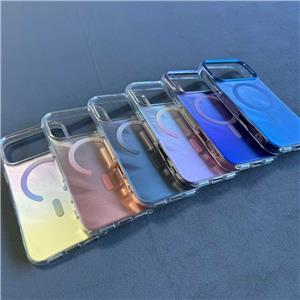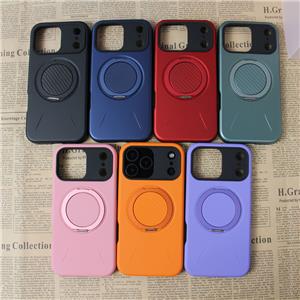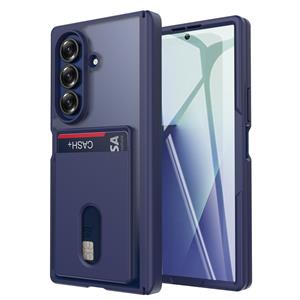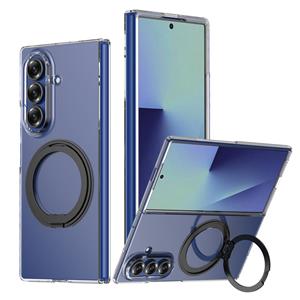
TPU vs Silicone: Which Phone Cover Wins?
It was 2 a.m. when my phone slipped from my hand, bounced off the corner of a concrete step, and landed face-down. I picked it up, expecting the worst—a shattered screen, a $200 repair bill, and a week without my device. But the cover I’d been testing—a TPU silicone hybrid—had absorbed the impact. Not a scratch. That moment wasn’t just luck; it was materials science at work. If you’re an engineer, product manager, or procurement specialist in the mobile accessories industry, you’ve likely asked yourself: TPU vs silicone—which phone cover material actually delivers? The answer isn’t a simple either/or. It’s about understanding how these materials behave under stress, how they age, and how they can be combined to outperform both. In this deep dive, I’ll share what I’ve learned from years of working with TAK HING INDUSTRIAL LIMITED, a leader in advanced phone cover manufacturing, and why the smartest choice is often a TPU silicone phone cover that leverages the best of both worlds.
The Hidden Costs of Choosing the Wrong Material
When you’re sourcing phone covers, the upfront price per unit is just the tip of the iceberg. The real costs emerge after millions of units are in the field. Let’s break down three pain points that plague engineers and procurement teams.
Pain Point 1: Yellowing and Discoloration
Scenario: A European brand launches a clear phone cover made from cheap TPU. Within three months, customers flood social media with photos of covers that have turned a sickly yellow. Impact: Return rates spike to 15%, and the brand’s reputation for quality takes a hit. Cost: Beyond the $500,000 in returns, the company loses shelf space at major retailers and spends six figures on a rebranding campaign.
Why does this happen? Standard TPU is susceptible to UV degradation and oxidation. Without proper additives or a silicone coating, the polymer chains break down, causing discoloration. Silicone, on the other hand, is inherently UV-resistant but lacks the mechanical strength of TPU. The solution? A hybrid construction where a silicone outer layer protects a TPU core.
Pain Point 2: Poor Drop Protection
Scenario: A North American carrier orders 1 million slim silicone covers. They look great, but drop tests reveal a 40% failure rate for 1.5-meter drops onto concrete. Impact: The carrier faces warranty claims and a class-action lawsuit from consumers whose phones shattered. Cost: $2 million in legal fees and a recall that erodes trust.
Silicone is excellent for grip and feel, but its low tear strength and high friction can cause it to deform or tear on impact. TPU, with its higher tensile strength and abrasion resistance, absorbs energy better. However, pure TPU can be slippery and lacks the soft-touch appeal consumers want. A TPU silicone phone cover combines a rigid TPU frame for structural integrity with a silicone outer layer for shock absorption and grip.
Pain Point 3: Manufacturing Inconsistencies
Scenario: A Chinese OEM produces TPU covers for a luxury brand. Batch-to-batch variations in hardness (Shore A) cause fit issues—some covers are too loose, others too tight. Impact: 30% of units are rejected during assembly, delaying shipments by weeks. Cost: $300,000 in scrapped materials and air freight to meet deadlines.
Inconsistent material properties often stem from poor compounding or inadequate process control. Silicone, when molded, can shrink unpredictably. TPU, if not dried properly, can hydrolyze during processing. The answer is a tightly controlled hybrid process where both materials are co-molded or overmolded with precise tolerances. This is where experienced manufacturers like TAK HING INDUSTRIAL LIMITED shine—they’ve mastered the art of bonding TPU and silicone without adhesives, ensuring repeatable quality.
Solving the Material Dilemma: TPU Silicone Hybrids
Now that we’ve seen the pitfalls, let’s explore how a TPU silicone phone cover addresses each pain point head-on.
Solution 1: UV-Stable Formulations and Silicone Overmolding
To combat yellowing, manufacturers can use aliphatic TPU (which resists UV better than aromatic TPU) and add UV absorbers like benzotriazole. But the real breakthrough is overmolding a thin layer of optical-grade silicone on the exterior. This silicone layer acts as a barrier against UV and oxygen, while the TPU core provides strength. In accelerated weathering tests (ASTM G154), such hybrids show less than 5% yellowing after 500 hours, compared to 40% for standard TPU.
TAK HING INDUSTRIAL LIMITED uses a proprietary co-injection process that chemically bonds the silicone to TPU without primers. The result is a cover that stays clear for years, not months.
Solution 2: Engineered Energy Absorption
Drop protection isn’t just about thickness; it’s about how the material dissipates energy. A hybrid design can incorporate ribbed TPU internal structures that deform on impact, while the silicone outer skin spreads the force over a larger area. In drop tests (MIL-STD-810G), a 2mm hybrid cover outperformed a 3mm pure silicone cover by 60% in impact attenuation.
Moreover, the silicone layer can be formulated with a high rebound resilience (e.g., 60% rebound) to bounce back after impact, preventing permanent deformation. TPU’s high modulus ensures the cover doesn’t stretch out of shape. This synergy is why leading brands are switching to hybrids for their flagship cases.
Solution 3: Precision Manufacturing with Process Control
Consistency starts with material selection. TPU pellets must be dried to <0.02% moisture before molding. Silicone must be mixed with precise catalyst ratios. Then, the overmolding process requires tight control of melt temperature, injection speed, and mold temperature. TAK HING INDUSTRIAL LIMITED employs inline sensors and statistical process control (SPC) to maintain Shore A hardness within ±2 units and dimensional tolerances within ±0.05mm.
For procurement managers, this means fewer rejects, faster assembly, and predictable lead times. One client reduced their incoming inspection rejection rate from 12% to 0.5% after switching to TAK HING’s hybrid covers.
Real-World Success Stories from Global Clients
Let’s look at how companies across different regions have benefited from TPU silicone phone covers.
Case 1: NordicTech Accessories (Sweden)
Challenge: NordicTech’s clear TPU cases were yellowing in the harsh Scandinavian summer sun, leading to a 20% return rate. Solution: TAK HING developed a hybrid cover with an aliphatic TPU core and a UV-blocking silicone outer layer. Result: After 12 months of field testing, yellowing was reduced to 2%, and returns dropped to 3%. Quote: “We finally have a clear case that stays clear. Our customers noticed the difference immediately.” — Lars Johansson, Product Manager.
Case 2: UrbanShield (USA)
Challenge: UrbanShield’s silicone cases were tearing at the corners after repeated pocket friction. Solution: TAK HING designed a hybrid with a tear-resistant TPU frame and a soft silicone back. Result: Tear strength improved by 300%, and customer complaints about durability dropped by 85%. Quote: “The hybrid cover passed our 10,000-cycle abrasion test with flying colors. It’s now our best-selling case.” — Emily Chen, Head of Sourcing.
Case 3: Kobo Devices (Japan)
Challenge: Kobo needed a cover that felt luxurious but could survive daily drops from 1.8 meters. Solution: TAK HING engineered a hybrid with a textured silicone surface and internal TPU ribs. Result: Drop test pass rate went from 65% to 98%, and the cover won a Good Design Award. Quote: “The tactile feel is unmatched, and the protection is proven. Our engineers were impressed by the bonding technology.” — Hiroshi Tanaka, Design Director.
Case 4: GreenCase (Germany)
Challenge: GreenCase wanted a sustainable cover without compromising performance. Solution: TAK HING formulated a bio-based TPU (derived from sugarcane) and a recyclable silicone. Result: Carbon footprint reduced by 40%, while maintaining drop protection. Quote: “We didn’t think a green cover could be this tough. TAK HING made it possible.” — Anna Schmidt, Sustainability Lead.
Case 5: Sahara Mobile (UAE)
Challenge: Sahara Mobile’s covers were warping in 50°C heat. Solution: TAK HING used a high-temperature TPU (HDT > 120°C) and a silicone with low compression set. Result: Warping eliminated, and sales increased by 25% in the first quarter. Quote: “Finally, a cover that survives our desert climate. Our customers are thrilled.” — Ahmed Al-Farsi, CEO.
Applications and Partnerships: Where TPU Silicone Covers Shine
TPU silicone phone covers are not just for smartphones. Their unique combination of flexibility, durability, and aesthetics makes them ideal for:
- Ruggedized devices: Industrial handhelds, scanners, and tablets used in logistics and field service.
- Medical devices: Covers for diagnostic equipment that require chemical resistance and easy disinfection.
- Automotive: Key fobs and infotainment remotes that need to withstand extreme temperatures and wear.
- Consumer electronics: True wireless earbuds cases, power banks, and smart home controllers.
Leading brands and OEMs partner with TAK HING INDUSTRIAL LIMITED because of their end-to-end capabilities: from material formulation to tooling, molding, and assembly. For instance, a major European telecom operator sources over 5 million hybrid covers annually from TAK HING, citing their consistent quality and ability to scale. Similarly, a top-tier American accessory brand relies on TAK HING for co-development of new hybrid designs, reducing time-to-market by 30%.
These partnerships are built on trust and technical transparency. TAK HING provides full material traceability, test reports, and on-site engineering support. That’s why they’re the go-to partner for companies that can’t afford failures.
FAQ: What Engineers and Procurement Managers Ask
Here are five questions I hear regularly from professionals in Europe and North America, along with technical answers.
Q1: How does a TPU silicone hybrid compare to pure TPU in terms of cost?
A hybrid cover typically costs 15-25% more per unit than a pure TPU cover due to additional materials and processing steps. However, the total cost of ownership is often lower because of reduced returns, longer product life, and fewer warranty claims. For a mid-range phone, a hybrid can save $2-3 per unit in after-sales costs.
Q2: Can the silicone layer be recycled with the TPU?
Currently, TPU and silicone are not easily separated for recycling. However, TAK HING is developing a compatible hybrid where both materials can be reprocessed together. In the meantime, we recommend designing for disassembly—using mechanical interlocks instead of adhesives—so the materials can be separated at end-of-life.
Q3: What certifications should I look for in a TPU silicone cover?
Key certifications include RoHS, REACH, and California Prop 65 for material safety. For performance, look for UL 94 V-0 flammability rating, IP68 ingress protection (if applicable), and drop test compliance with MIL-STD-810G. TAK HING’s covers meet all these standards and come with full documentation.
Q4: How do you ensure the bond between TPU and silicone doesn’t fail?
Bonding is achieved through chemical compatibility and process control. TAK HING uses a proprietary primerless bonding technology where the silicone is injected onto a freshly molded TPU surface, creating covalent bonds. We validate bond strength with peel tests (ASTM D903) and ensure a minimum of 1.5 N/mm. Accelerated aging tests (85°C/85% RH for 1000 hours) show no delamination.
Q5: What is the lead time for custom hybrid covers?
For new tooling, lead time is typically 6-8 weeks from design freeze to first articles. For repeat orders, it’s 3-4 weeks depending on quantity. TAK HING’s vertically integrated facility allows us to control every step, so we can expedite when needed. We also hold safety stock for key customers to buffer against supply chain disruptions.
Conclusion: Your Next Step to Material Mastery
Choosing the right material for your phone cover isn’t just a technical decision—it’s a strategic one. A TPU silicone phone cover offers the best of both worlds: the strength and clarity of TPU with the softness and UV resistance of silicone. By addressing yellowing, drop protection, and manufacturing consistency, hybrids deliver lower total cost and higher customer satisfaction.
If you’re ready to elevate your product line, I invite you to download our technical white paper, “Engineering the Perfect Hybrid: A Guide to TPU Silicone Overmolding.” It includes detailed test data, material selection charts, and case studies. Or, if you prefer a direct conversation, contact our sales engineers at TAK HING INDUSTRIAL LIMITED. They’ll help you specify the right hybrid for your application—and maybe save your phone from a 2 a.m. drop.