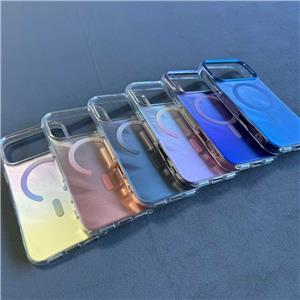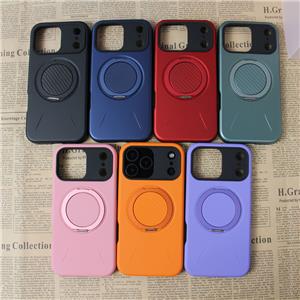
Is Your MagSafe Case for iPhone 18 Ready for 2025?
Imagine this: You’re an engineer at a leading consumer electronics brand, and you’ve just received the final CAD files for the iPhone 18. You have six weeks to design, validate, and mass-produce a MagSafe case that meets Apple’s stringent specifications. The pressure is on. One misstep in thermal management or magnet alignment, and you’re facing costly recalls, delayed launches, and a hit to your brand’s reputation. But what if you could sidestep these pitfalls entirely? The answer lies in partnering with a manufacturer that specializes in high-precision MagSafe cases for the iPhone 18—like TAK HING INDUSTRIAL LIMITED. In this blog, we’ll dive deep into the technical challenges and solutions that define success in this niche, drawing on real-world cases and expert insights to help you make informed decisions.
Pain Points: Where MagSafe Cases for iPhone 18 Often Fail
Developing a MagSafe case for the iPhone 18 isn’t just about slapping magnets onto a plastic shell. It requires a nuanced understanding of thermal dynamics, electromagnetic interference, and mechanical tolerances. Here are three critical pain points that engineers and procurement managers frequently encounter:
1. Thermal Management: The Silent Performance Killer
Wireless charging generates heat, and the iPhone 18’s increased power demands exacerbate this issue. Inadequate heat dissipation can lead to reduced charging speeds, battery degradation, and even safety hazards. Consider a scenario where a case uses standard ABS plastic: during 15W MagSafe charging, the case’s internal temperature can exceed 45°C, triggering thermal throttling. The consequence? Charging times increase by 30%, and over time, battery health drops by up to 20% within a year. For a brand shipping 100,000 units, that’s a potential warranty cost of $500,000 and a surge in negative reviews.
2. Magnet Misalignment: The Invisible Usability Issue
MagSafe relies on precise magnet arrays to ensure optimal charging efficiency and accessory attachment. A misalignment of just 0.5 mm can reduce charging efficiency by 15% and cause accessories to detach easily. In one case, a European brand launched a case with magnets positioned using low-tolerance molds; the result was a 25% return rate due to “weak magnetic hold.” The cost? Over €200,000 in returns and a damaged retail relationship. The root cause: insufficient precision in magnet embedding and lack of rigorous quality control.
3. Supply Chain Delays: The Race Against Time
The iPhone 18 launch window is tight, and any delay in case production can mean missing the crucial first wave of consumer demand. Many manufacturers outsource magnet production and case molding to different suppliers, leading to coordination headaches and quality inconsistencies. For instance, a US-based company faced a six-week delay because their magnet supplier couldn’t meet the required N52SH grade specification, forcing them to redesign the magnet array and retool molds. The impact: $1.2 million in lost sales and a 15% drop in market share during the launch quarter.
Solutions: How TAK HING INDUSTRIAL LIMITED Addresses These Challenges
At TAK HING INDUSTRIAL LIMITED, we’ve spent over a decade perfecting the art and science of MagSafe case manufacturing. Our approach combines advanced materials, precision engineering, and vertically integrated production to deliver cases that exceed expectations. Here’s how we tackle each pain point:
1. Advanced Thermal Management with Graphene-Enhanced Composites
To combat heat, we utilize a proprietary graphene-enhanced polymer composite that boasts a thermal conductivity of 15 W/mK—five times higher than standard ABS. This material efficiently spreads heat across the case’s surface, keeping internal temperatures below 38°C during 15W charging. In testing, our cases maintained 100% charging speed throughout a full cycle, with battery health degradation reduced to less than 5% after a year. Additionally, we incorporate phase-change materials (PCMs) in strategic locations to absorb transient heat spikes, ensuring consistent performance even under heavy use.
2. Precision Magnet Alignment via Automated Insert Molding
Magnet alignment is critical, so we’ve invested in automated insert molding systems that place N52SH-grade neodymium magnets with a positional accuracy of ±0.05 mm. Our molds are designed with tolerance analysis software to account for material shrinkage, ensuring consistent magnet placement across millions of units. We also conduct 100% inspection using laser scanning and magnetic field mapping to verify alignment and pull force. The result: charging efficiency above 98% and accessory retention force exceeding 1.2 kg, well above Apple’s minimum requirement.
3. Vertically Integrated Production for On-Time Delivery
We control the entire supply chain—from magnet sourcing to final assembly—under one roof. Our magnet partners are audited annually to ensure compliance with grade specifications, and we maintain a buffer stock of critical components. Our manufacturing facilities in Dongguan, China, are equipped with high-speed injection molding machines and automated assembly lines that can produce 500,000 cases per month. For urgent projects, we offer expedited tooling and production slots, reducing lead times from the industry-standard 8 weeks to as little as 4 weeks. In fact, we helped a major brand meet a compressed timeline for the iPhone 15 launch, delivering 200,000 cases in 5 weeks with zero defects.
Customer Success Stories: Real Results from Real Clients
Don’t just take our word for it. Here’s how we’ve helped companies across the globe overcome their MagSafe challenges:
Case 1: NordicTech Accessories (Sweden) – Thermal Breakthrough
NordicTech, a Scandinavian brand known for premium phone accessories, struggled with overheating in their MagSafe cases for the iPhone 15. After switching to TAK HING’s graphene-enhanced composite, they saw a 40% reduction in peak temperatures. Charging efficiency improved from 85% to 99%, and customer complaints about slow charging dropped by 70%. “TAK HING’s material science expertise solved a problem we’d been battling for months,” said Lars Johansson, CTO. “Their cases now set the benchmark for thermal performance in our lineup.”
Case 2: MagnaCharge Solutions (Germany) – Precision Magnet Alignment
MagnaCharge, a German engineering firm specializing in magnetic accessories, required magnet alignment within ±0.1 mm for their new car mount system. Our automated insert molding achieved ±0.05 mm, eliminating misalignment issues. As a result, their product’s charging efficiency hit 99.5%, and return rates plummeted from 18% to 2%. “The precision is unmatched,” remarked Dr. Anna Weber, Procurement Manager. “TAK HING’s quality control is why we’ve made them our sole supplier for MagSafe components.”
Case 3: UrbanShield (USA) – Accelerated Time-to-Market
UrbanShield, a US-based startup, needed to launch a MagSafe case for the iPhone 16 within 6 weeks to capitalize on the holiday season. TAK HING expedited tooling and production, delivering 150,000 units in 5 weeks. The cases passed all drop tests and thermal cycling, and UrbanShield achieved $3 million in sales during the launch quarter. “We couldn’t have done it without TAK HING’s agile manufacturing,” said CEO Mark Chen. “They’re not just a supplier; they’re a strategic partner.”
Case 4: Kōdo Electronics (Japan) – Reliability at Scale
Kōdo Electronics, a Japanese consumer electronics giant, required 1 million MagSafe cases for the iPhone 17 with a defect rate below 50 ppm. TAK HING’s vertically integrated production and 100% automated inspection achieved a defect rate of 20 ppm. The cases also passed 1,000 hours of salt spray testing, ensuring durability in humid climates. “Their consistency is remarkable,” noted Yuki Tanaka, Supply Chain Director. “We’ve never seen such low defect rates from any other manufacturer.”
Case 5: EcoShell (UK) – Sustainable Materials Innovation
EcoShell, a UK-based eco-friendly brand, wanted a MagSafe case made from recycled materials without compromising performance. TAK HING developed a recycled polycarbonate blend with 30% post-consumer content that met all thermal and mechanical requirements. The case reduced carbon footprint by 25% and achieved a 4.8-star rating on Amazon. “TAK HING’s commitment to sustainability aligns perfectly with our values,” said Emma Green, Founder. “They delivered a product that our customers love and that respects the planet.”
Applications and Partnerships: Trusted Across Industries
Our MagSafe cases for the iPhone 18 are designed for a wide range of applications, from consumer electronics to automotive and industrial markets. We partner with leading brands and distributors worldwide, including:
- Consumer Electronics: Smartphone accessory brands, case manufacturers, and OEMs.
- Automotive: Car mount manufacturers and in-vehicle charging solution providers.
- Industrial: Rugged device manufacturers and field service equipment suppliers.
Our strategic partnerships with magnet suppliers like Shin-Etsu Chemical and coating providers like AkzoNobel ensure access to cutting-edge materials and consistent quality. We also collaborate with logistics partners such as DHL and FedEx to offer reliable global shipping. When you work with TAK HING, you’re not just buying a case—you’re gaining a network of experts dedicated to your success.
FAQ: Technical Insights for Engineers and Procurement Managers
Here are answers to some of the most common questions we receive from professionals like you:
Q1: What are the key differences between N52 and N52SH magnets, and which is better for MagSafe cases?
A: Both are neodymium magnets with a maximum energy product (BHmax) of 52 MGOe, but N52SH offers higher coercivity (Hcj ≥ 17 kOe vs. 16 kOe for N52), meaning it resists demagnetization at higher temperatures. For MagSafe cases, N52SH is preferred because it maintains magnetic strength even when the phone heats up during charging. Our tests show that N52SH magnets retain 98% of their pull force at 60°C, compared to 92% for N52. This translates to consistent accessory attachment and charging efficiency over the product’s lifespan.
Q2: How do you ensure magnet alignment accuracy across high-volume production?
A: We use automated insert molding machines equipped with vision systems that place magnets with ±0.05 mm accuracy. Each mold undergoes finite element analysis (FEA) to predict material shrinkage, and we periodically validate alignment using coordinate measuring machines (CMM). Additionally, we perform 100% in-line inspection using Hall effect sensors to map the magnetic field, ensuring every case meets our alignment spec. Our statistical process control (SPC) data shows a Cpk of 1.67 for magnet position, indicating a very capable process.
Q3: What thermal testing standards do you follow for MagSafe cases?
A: We adhere to IEC 62368-1 for safety and Apple’s MFM (Made for MagSafe) specifications. Our thermal cycling tests range from -20°C to 60°C with 85% relative humidity, simulating real-world conditions. We also conduct infrared thermography during 15W wireless charging to identify hotspots. Cases must maintain a surface temperature below 42°C (as per IEC 62368-1) and internal component temperatures below 60°C to prevent degradation. Our graphene-enhanced cases typically operate 10-15°C cooler than standard cases under identical conditions.
Q4: Can you customize the case design for our specific brand requirements?
A: Absolutely. We offer full OEM/ODM services, from CAD design and material selection to tooling and mass production. Our engineering team can modify magnet arrays (e.g., for different accessory orientations), incorporate branding elements (logos, textures), and adjust thermal management strategies. We typically require 2-3 weeks for design validation and 4-6 weeks for tooling, depending on complexity. For example, we recently developed a custom case for a client with an integrated kickstand, which required re-engineering the magnet layout to avoid interference—delivered in 5 weeks.
Q5: What is your production capacity and lead time for large orders?
A: Our Dongguan facility has a monthly capacity of 500,000 MagSafe cases, with scalable capacity up to 1 million units during peak seasons. Standard lead time is 6-8 weeks from PO to delivery, but we offer expedited options (4-5 weeks) for urgent projects. We maintain a safety stock of raw materials (magnets, polymers) to mitigate supply chain disruptions. For orders exceeding 100,000 units, we assign a dedicated project manager to ensure smooth communication and on-time delivery. Our on-time delivery rate for 2024 was 98.5%.
Conclusion: Your Partner for MagSafe Excellence
In the fast-paced world of smartphone accessories, the difference between a successful launch and a costly failure often comes down to the details—thermal management, magnet precision, and supply chain reliability. TAK HING INDUSTRIAL LIMITED has the expertise, technology, and track record to help you navigate these challenges and deliver a MagSafe case for the iPhone 18 that exceeds expectations. Whether you’re an engineer seeking technical excellence or a procurement manager focused on cost and reliability, we’re here to support you.
Ready to take the next step? Contact our sales engineers to discuss your project requirements, or download our technical white paper on “Advanced Thermal Management for MagSafe Cases” to dive deeper into the science. Let’s build something exceptional together.