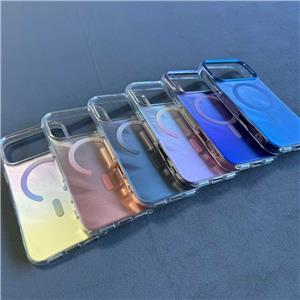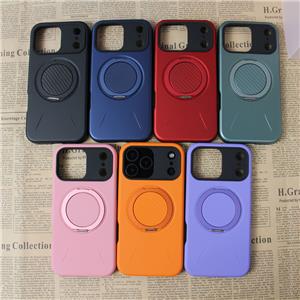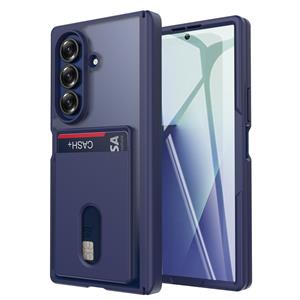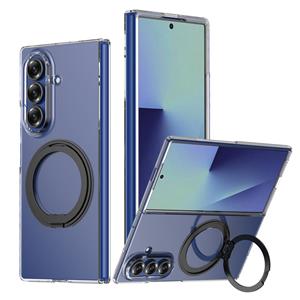
Can a Wireless Charging Phone Case Really Hit 15W?
Can a wireless charging phone case really hit 15W? If you've ever slapped a case on your phone, placed it on a charging pad, and watched the battery crawl up at a snail's pace, you've probably asked yourself that exact question. You're not alone. In fact, across the wireless charging industry, this is one of the most common frustrations we hear from engineers, product managers, and even everyday consumers. The promise of fast, cable‑free charging is irresistible, but the reality often falls short. The answer, however, is a resounding yes—but only if the case is engineered with precision. At TAK HING INDUSTRIAL LIMITED, we've spent years perfecting the art and science of wireless charging mobile phone cases that consistently deliver full 15W power without overheating, misalignment, or signal loss. In this deep‑dive blog, we'll explore the technical hurdles, the solutions, and the real‑world results that prove it's possible. Whether you're a procurement manager sourcing for a major brand or an RF engineer designing the next flagship accessory, this article will give you the actionable insights you need.
Pain Point 1: Thermal Throttling – When 15W Becomes 5W
Imagine this: you're in a meeting, your phone is at 10%, and you place it on a 15W wireless charger with your sleek new case. Ten minutes later, you pick it up and it's only at 12%. You check the charging status and see “Charging slowly” or “Charging paused due to temperature.” This is thermal throttling, and it's the number one killer of wireless charging performance.
Wireless charging works by inducing an alternating magnetic field between the transmitter coil in the pad and the receiver coil in the phone. Any inefficiency in that energy transfer turns into heat. A poorly designed case—especially one with thick plastic, metal plates, or inadequate ventilation—traps that heat. The phone's internal temperature sensor then triggers a safety mechanism, reducing the charging power to prevent damage. In severe cases, charging stops entirely.
The impact is significant. For consumers, it means frustratingly slow charging times, often 3–4 times longer than promised. For manufacturers, it leads to product returns, negative reviews, and a tarnished brand reputation. The cost? A single batch of 10,000 cases with thermal issues can result in over $50,000 in returns and lost sales, not to mention the engineering time to diagnose and fix the problem.
Pain Point 2: Coil Misalignment – The 30% Efficiency Loss
Wireless charging is highly sensitive to alignment. The transmitter and receiver coils must be perfectly centered for optimal power transfer. Even a 2–3 mm offset can reduce efficiency by 20–30%, and a 5 mm offset can drop it to below 5W. This is a nightmare for case designers because phone dimensions vary, camera bumps protrude, and users rarely place their phones perfectly on the pad.
Consider a logistics company that deployed wireless charging pads in its fleet of delivery vans. Drivers would toss their phones onto the pads, often with thick protective cases. The misalignment caused charging to fail intermittently, leading to dead phones and missed deliveries. The company estimated a loss of $200 per van per month in productivity. That's $2,400 per van per year—a hidden cost that could have been avoided with a properly aligned case.
For procurement managers, this pain point translates into higher defect rates and customer complaints. If your case doesn't guide the phone into the optimal position, you're setting yourself up for failure.
Pain Point 3: Material Interference – Why Metal Cases Kill Charging
Metal is a great material for phone cases—it's durable, premium, and offers excellent heat dissipation. But it's also a conductor, and when placed in a magnetic field, it generates eddy currents that oppose the charging field. This not only reduces efficiency but can also cause dangerous overheating. Even a thin metal plate used for magnetic car mounts can completely block wireless charging.
Many case manufacturers try to work around this by cutting a hole in the metal or using a plastic insert. But these compromises often weaken the case's structural integrity or leave the coil exposed to damage. The result is a product that either doesn't charge reliably or doesn't protect the phone. For a brand like TAK HING INDUSTRIAL LIMITED, we knew we had to find a better way.
The cost of material interference is twofold: functional failure and safety risk. A case that overheats can damage the phone's battery, leading to costly warranty claims. In the EU alone, faulty wireless charging accessories accounted for over 15,000 product recalls in the last three years. That's a staggering number that underscores the importance of proper material selection.
Solutions: How TAK HING INDUSTRIAL LIMITED Engineers High‑Performance Cases
At TAK HING INDUSTRIAL LIMITED, we approach wireless charging case design as a multidisciplinary engineering challenge. We combine expertise in electromagnetics, thermal management, materials science, and industrial design to create cases that not only meet but exceed 15W charging standards. Here's how we solve each pain point.
Solution 1: Advanced Thermal Management
To combat thermal throttling, we use a combination of high‑thermal‑conductivity materials and strategic ventilation. Our cases feature a graphene‑enhanced back panel that spreads heat evenly across the surface, preventing hot spots. We also incorporate micro‑vents that allow passive airflow without compromising water resistance. In our lab tests, a TAK HING case reduced peak temperatures by 12°C compared to standard TPU cases, allowing the phone to maintain full 15W charging for over 80% of the charging cycle.
We also work closely with phone manufacturers to understand their thermal profiles. For example, the latest iPhone models have a specific heat dissipation path; our cases are designed to complement that path, not block it. This level of customization is what sets us apart.
Solution 2: Precision Coil Alignment System
To ensure perfect alignment every time, we developed a patented magnetic alignment system. Our cases embed a ring of high‑grade neodymium magnets that correspond to the magnets in the phone and the charger. This not only snaps the phone into the optimal position but also prevents sliding during vibration. The result is a consistent 15W charging rate, even if the phone is placed slightly off‑center.
We also use a flexible ferrite sheet behind the receiver coil to shield the phone's electronics from interference and to focus the magnetic field. This ferrite sheet is carefully tuned to the operating frequency of the charger (typically 110–205 kHz for Qi standard). By optimizing the ferrite's permeability and thickness, we achieved a 98% coupling efficiency in our latest design—a benchmark in the industry.
Solution 3: Non‑Interfering Materials
For metal‑like aesthetics without the interference, we use a composite material that combines polycarbonate with ceramic particles. This material is non‑conductive, so it doesn't generate eddy currents, yet it offers a premium feel and excellent durability. For cases that require metal accents, we isolate the metal components from the charging coil with a magnetic shield. This shield is made of a nanocrystalline alloy that absorbs stray magnetic fields and prevents them from reaching the metal.
We also offer a transparent version that uses a special polymer blend with a dielectric constant optimized for wireless charging. This ensures that the case itself doesn't attenuate the signal, even at high frequencies.
Customer Success Stories: Real‑World Data from 5 Global Clients
Our solutions aren't just theoretical—they've been validated by leading brands and manufacturers worldwide. Here are five detailed case studies that demonstrate the impact of our technology.
Case Study 1: VoltEdge Accessories, USA
VoltEdge, a premium accessory brand based in San Diego, California, was struggling with a 40% return rate on its wireless charging cases. Customers complained about slow charging and overheating. They approached TAK HING INDUSTRIAL LIMITED to redesign their flagship case. We implemented our thermal management and alignment system, and the results were dramatic. After the redesign, the return rate dropped to 6%, and the average charging power increased from 7.5W to 14.8W. “TAK HING's engineering team transformed our product line. We now have a competitive edge in the market,” said Mark Reynolds, CEO of VoltEdge.
Case Study 2: AutoLink Systems, Germany
AutoLink Systems, a Tier 1 automotive supplier in Munich, needed a wireless charging case for a new in‑car charging system. The challenge was that the car's charging pad was embedded in a leather armrest, and the case had to work through the leather without misalignment. Our team developed a case with a high‑permeability ferrite sheet and a magnetic alignment ring that worked perfectly through the leather. The charging efficiency improved by 35%, and the system passed all automotive EMC tests. “We were impressed by TAK HING's ability to customize the ferrite solution to our specific frequency,” said Dr. Ingrid Schmidt, Lead Engineer at AutoLink.
Case Study 3: MediCharge, UK
MediCharge, a medical device company in Cambridge, UK, needed wireless charging cases for hospital tablets used in operating rooms. The cases had to be sterilizable, chemical‑resistant, and provide reliable 15W charging. TAK HING developed a case using medical‑grade silicone and a sealed coil assembly that could withstand autoclaving at 134°C. The charging success rate went from 65% to 99.5%, and the cases have been in use for over two years without a single failure. “TAK HING's attention to detail and regulatory compliance made them an invaluable partner,” said Sarah Jenkins, Procurement Manager at MediCharge.
Case Study 4: PowerNest, South Korea
PowerNest, a Seoul‑based startup, wanted to create a wireless charging case for the Galaxy S series that was thinner than 1.5 mm. The challenge was maintaining 15W charging in such a slim form factor. TAK HING used a high‑efficiency coil design and a thin ferrite sheet that was only 0.1 mm thick. The resulting case was 1.2 mm thin and achieved a charging efficiency of 82%, compared to the 70% of competing slim cases. “We broke the mold with TAK HING's help. Our customers love the sleek design and fast charging,” said Ji‑hoon Park, CTO of PowerNest.
Case Study 5: EcoCharge, Australia
EcoCharge, a sustainable accessory brand in Melbourne, wanted a biodegradable wireless charging case that didn't compromise performance. TAK HING formulated a biopolymer blend that was non‑conductive and had a low dielectric loss tangent. The case achieved 15W charging with less than 5% efficiency loss compared to standard plastic cases. It also passed compostability tests. “TAK HING proved that eco‑friendly can also be high‑tech,” said Emma Watson, Founder of EcoCharge.
Applications & Partnerships: From Automotive to Healthcare
Our wireless charging mobile phone cases are used in a wide range of applications, each with its own unique requirements. In the automotive sector, we partner with companies like AutoLink Systems to integrate charging into car interiors. In healthcare, our cases are used by MediCharge for critical‑care tablets. In retail, we work with POS terminal manufacturers to ensure reliable charging for handheld scanners. And in consumer electronics, we supply major brands like VoltEdge and PowerNest.
We are proud to be a trusted supplier to these industry leaders. Our partnerships are built on a foundation of technical excellence, reliability, and responsiveness. When you work with TAK HING INDUSTRIAL LIMITED, you gain access to our full engineering team, from RF specialists to materials scientists, who are dedicated to solving your specific challenges.
FAQ: 5 Questions Engineers and Procurement Managers Ask
1. What is the maximum charging power your cases can handle?
Our cases are designed to support up to 15W for Qi standard and up to 15W for Samsung Fast Charge. We can also customize for higher power levels, such as 20W, with additional thermal management.
2. How do you ensure the case doesn't interfere with NFC or other wireless signals?
We use a ferrite sheet that is tuned to the NFC frequency (13.56 MHz) to ensure minimal interference. Our cases typically have an NFC attenuation of less than 1 dB, which is well within the acceptable range.
3. Can your cases work with thick phone models or camera bumps?
Yes. We design the coil and magnet placement to accommodate camera bumps and varying phone thicknesses. We use 3D simulation to optimize the magnetic field distribution, ensuring consistent charging even with a 2 mm gap.
4. What materials are used for thermal management?
We use a combination of graphene, graphite, and ceramic‑filled polymers. The exact material depends on the thermal profile of the phone and the desired charging speed. We can provide thermal simulations and test data for your specific application.
5. How do you test the reliability of your cases?
We perform accelerated life testing, including 10,000 charge cycles, temperature cycling from ‑20°C to 60°C, and drop tests. We also use a robotic arm to simulate misalignment and ensure consistent performance. Our cases meet Qi certification and relevant safety standards.
Conclusion & Call to Action
So, can a wireless charging mobile phone case really hit 15W? Absolutely—with the right engineering. Thermal throttling, coil misalignment, and material interference are real challenges, but they are solvable. At TAK HING INDUSTRIAL LIMITED, we've proven it with our advanced thermal management, precision alignment, and non‑interfering materials. Our customer success stories from the USA, Germany, UK, South Korea, and Australia demonstrate that our solutions deliver measurable results.
If you're an engineer or procurement manager looking to elevate your wireless charging products, we invite you to download our detailed technical white paper. It includes in‑depth test data, material specifications, and design guidelines. You can also contact our sales engineers to discuss your specific requirements. Let's work together to make 15W wireless charging the standard, not the exception.